
The History of Boom Lifts, Scissor Lifts, and Manlifts: From Cherry Pickers to Modern Aerial Work Platforms
In the world of construction, maintenance, utilities, firefighting, and industrial work, few machines have transformed safety and productivity quite like aerial work platforms (AWPs) — also known as mobile elevating work platforms (MEWPs).
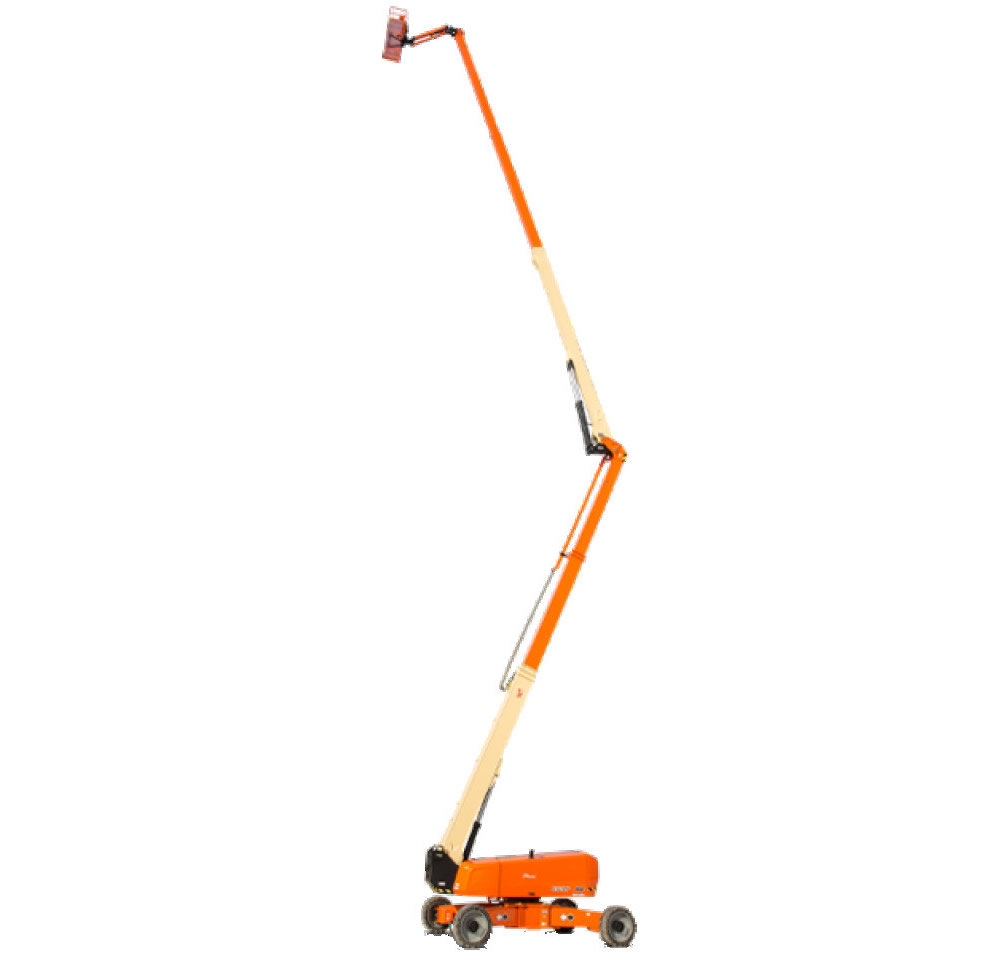
Among them, boom lifts (often called cherry pickers), scissor lifts, and manlifts (typically vertical mast or personnel lifts) stand out as the workhorses that let workers reach dizzying heights with stability, precision, and far less risk than ladders or scaffolding ever allowed. Their story is one of agricultural ingenuity, tragic inspiration, rapid industrialization in the mid-20th century, and relentless innovation that continues today. This extensive history traces their origins, key inventors, landmark developments, and lasting impact.
Early Precursors: Ladders, Scaffolding, and the First Mechanical Lifts (Pre-1940s)
For millennia, reaching heights meant precarious ladders, wooden scaffolding, or simple levers like the ancient shaduf (circa 3000 BC) used for irrigation. By the early 20th century, industrialization demanded better solutions. In the 1920s, hydraulic lifts mounted on cars appeared in Sweden for streetlight maintenance — crude, towed platforms that hinted at what was to come. Hydraulic technology itself dated back further: a steam-powered hydraulic lift appeared as early as 1845, though it was limited by primitive power sources and stability.
These early devices were inefficient and dangerous. Falls from scaffolding or ladders caused countless injuries and deaths. The push for safer, more efficient height access would soon spark a revolution in orchard fields and construction sites alike.
The Birth of the Boom Lift: Cherry Pickers Take Flight (1940s–1970s)
The modern boom lift traces its roots directly to agriculture. In 1944, Jay Eitel, frustrated after a day of ladder-climbing to pick cherries in California, invented the first “cherry picker” — a truck- or trailer-mounted platform on a hydraulic arm. He founded Telsta Corporation in Sunnyvale, California, in 1953 to manufacture and commercialize it. Another early player, Stemm Brothers in Leavenworth, Washington, produced similar units. These machines quickly proved their worth beyond orchards, finding uses in telephone line installation, streetlight maintenance, and more.
Parallel innovation came from Canada. In 1951, Walter E. “Ted” Thornton-Trump, an orchard worker in Oliver, British Columbia, created the first self-propelled boom lift after seeing a pneumatic pruning machine. He called his double-boom hydraulic device the “Giraffe” (though the cherry picker name stuck). It allowed workers to reach high branches, carry loads, and descend safely. By 1956, he debuted the improved single-boom “Girette,” which was fully self-powered and self-propelled. Thornton-Trump patented his “electric boom structure” and lifting apparatus in the early 1960s. His designs sold globally, including models for firefighting.
By 1958, boom lifts appeared on fire engines, offering faster and safer access than ladders. Non-agricultural demand grew rapidly. In 1961, Carl Ruegg in Selma, California, bought designs for the “Tree Farmer” (a self-propelled boom by farmer John Baerg) and evolved it into the “Tree Master.” As interest expanded beyond orchards, the company rebranded to “Manlift” — a name that would later influence terminology for personnel lifts.
The pivotal moment came in 1969 when John L. Grove and his wife witnessed two workers electrocuted on scaffolding at Hoover Dam. Inspired to create a safer alternative, Grove founded Condor Industries (later JLG Industries) in 1969. In 1970, JLG introduced the world’s first telescoping boom lift — the 27-foot “Condorlift.” It was a game-changer: self-propelled, with a straight-extending boom for greater reach. By 1972, JLG offered 65- and 80-foot models. This era marked the shift from truck-mounted “cherry pickers” to fully mobile, stand-alone aerial platforms.
In the 1980s, articulating (knuckle) booms emerged. Genie launched the groundbreaking Z-30/20 in 1985, enabling “up-and-over” reach around obstacles — a design still in use today.
Scissor Lifts: Vertical Precision Takes Center Stage (1960s–1990s)
While boom lifts reached out and up, scissor lifts focused on pure vertical elevation with a stable, expanding “pantograph” (scissor) mechanism. Hydraulic lifts existed in the 1920s, but the modern scissor lift crystallized in the 1960s.
In 1963, Charles Larson patented a U.S. design for an “extensible lift mechanism” using opposed scissor arms and a hydraulic ram for efficient lift with a short stroke (patent granted 1966). Though Larson’s patent laid the technical foundation, John W. Parker of California is widely credited as the true inventor. Parker developed a practical, self-propelled tow-behind (and later fully mobile) version that simplified construction and improved performance.
Mass production ramped up in the mid-1970s. JLG released its first scissor lift prototype in 1976, the same year MEC introduced pothole protection systems — a critical safety feature now standard on slab (indoor) models. Competitors flooded the market, driving improvements in height, robustness, and drive systems. By the early 1990s, scissor lifts routinely exceeded 25 feet of platform height, becoming the “Swiss Army Knife” of indoor and slab work.
Manlifts and Vertical Mast Lifts: Compact Access for Tight Spaces (1990s–Present)
“Manlifts” often refer to vertical mast or personnel lifts — compact, single-mast telescoping platforms designed for one or two workers in confined indoor environments like warehouses, retail aisles, or factories. Early “Manlift” branding came from the Selma company (later acquired by JLG in 2004), but the modern self-propelled vertical mast category emerged later.
JLG introduced the first mobile vertical lift in 1996. These machines offered straight-up access with a tiny footprint, electric power for zero emissions, and doorway maneuverability. MEC entered the market in 2021 with models like the MME20/25 and all-electric variants. Vertical mast lifts (sometimes called “one-man lifts” or “personnel lifts”) filled the gap between ladders and larger scissor/boom platforms, emphasizing speed, portability, and light-duty tasks like painting, electrical work, or inventory management.
Technological Evolution and Safety Milestones (1980s–2020s)
The 1980s–2000s brought hybrid power (electric/diesel), oscillating axles (JLG, 1981), extendable platforms, and taller booms. JLG’s 150HAX (1991) hit 150 feet; the 1850SJ (2014) reached 185+ feet — the largest self-propelled boom for years. Electric booms arrived in the 1990s–2000s for indoor use, followed by fuel-cell and all-electric models (JLG DaVinci AE1932 scissor in 2021).
Safety regulations transformed the industry. ANSI A92 standards (updated significantly in 2020 with A92.20) mandated load sensing, taller guardrails, and rigorous testing. Features like pothole protection, self-leveling booms (JLG 670SJ, 2022), and telematics became standard. Hybrid and all-electric machines reduced emissions and noise, while tracked “spider” variants added rough-terrain capability.
Major players MANLIFT, offers the best in the industry including explosion proof lifts.
Impact Across Industries and the Road Ahead
These lifts have saved countless lives by replacing unstable scaffolding and ladders. They power everything from skyscraper construction and bridge maintenance to warehouse stocking, film production, and emergency response. Productivity soared: one operator can now access heights and angles that once required teams and hours.
Looking forward, expect further electrification, AI-assisted positioning, greater automation, and integration with drones or robotics for even safer “no-touch” operations. Sustainability, operator ergonomics, and extreme-height models (200+ feet) will drive the next chapter.
From Ted Thornton-Trump’s Giraffe in an apple orchard to JLG’s self-leveling mega-booms and all-electric scissors, boom lifts, scissor lifts, and manlifts embody human ingenuity at its most elevating. They don’t just reach the sky — they make working there safer, faster, and more accessible than ever before.
Whether you’re a fleet manager, operator, or history buff, these machines prove that the best inventions often start with a simple problem: *How do I get up there safely?* The answer has evolved dramatically — and the sky is no longer the limit.