
Reaching New Heights: The Evolution and Utility of Scissor Lifts
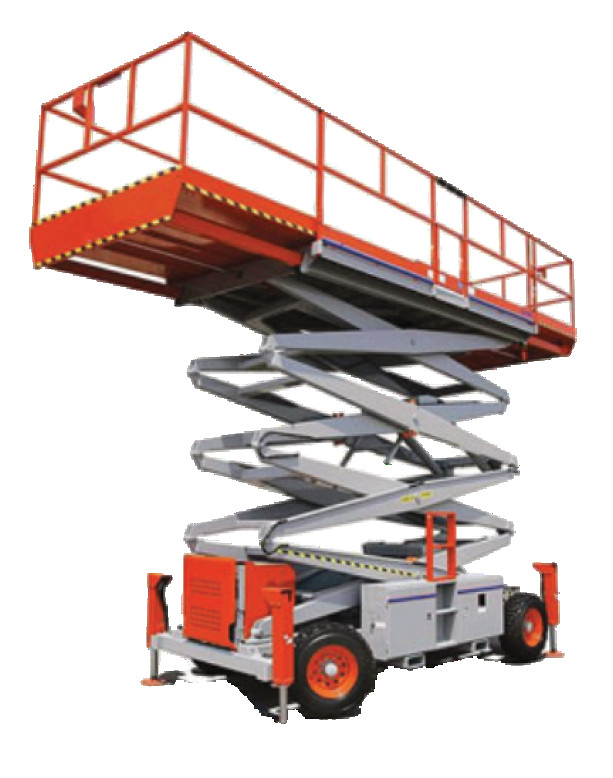
If you’ve ever walked past a construction site, peered into a massive warehouse, or watched a maintenance crew change high-ceiling light fixtures in an arena, you’ve seen a scissor lift in action. With their signature criss-cross metal bracing that extends vertically, these machines are the unsung heroes of modern industry.
Before they became sleek, battery-powered staple equipment, accessing high spaces was a dangerous game of shaky wooden scaffolding and questionable ladders. Let’s look at how the scissor lift evolved from a simple mechanical patent into an indispensable asset across dozens of industries.
The Evolution: From Pantographs to High-Tech Hydraulics
The mechanical foundation of the scissor lift relies on the pantograph—a geometric folding mechanism that dates back centuries. However, utilizing this concept to lift heavy loads and human beings required 20th-century engineering.
1963: The Spark of Invention
The official story of the modern scissor lift begins in 1963 when an inventor named Charles Larson filed a patent in the United States for a “scissor lift extension platform.” Larson’s design utilized a series of linked, folding supports that used hydraulic power to push a platform straight up.
The 1970s: Commercial Boom and Safety Focus
While Larson laid the groundwork, companies like JLG Industries (founded by John L. Grove) and Skyjack refined the concept in the 1970s. This era transformed the scissor lift from a static piece of factory equipment into a mobile aerial work platform (AWP). Engineers added drivable wheel bases, heavy-duty outriggers for stability, and strict safety railings to protect workers.
The 2000s to Present: Clean Energy and Intelligence
Today’s scissor lifts have ditched loud, exhaust-heavy diesel engines for indoor use. Modern fleets lean heavily toward zero-emission electric and lithium-ion battery power, featuring non-marking tires designed specifically for delicate indoor flooring. They also come packed with smart tech: tilt sensors, automatic potholes protection, and load-sensing systems that won’t allow the machine to operate if it exceeds weight limits.
Why They Are Useful: The Ultimate Utility Players
While boom lifts (cherry pickers) are great for reaching up and over obstacles at complex angles, scissor lifts excel at pure vertical lifting power. They offer several distinct advantages that make them uniquely useful:
- Massive Platform Capacity
Unlike ladders or individual vertical lifts, scissor lifts feature a large, rectangular workspace. Many models include rollout extension decks, allowing multiple workers, heavy toolboxes, and raw materials (like drywall sheets or pipe conduits) to be elevated simultaneously.
- Exceptional Stability and Safety
Working on a ladder leaves a technician with limited mobility and a high risk of falls. Scissor lifts provide a completely enclosed steel cage. Because the mechanical load is distributed evenly across the interlocking steel cross-members, the platform remains rock-solid even at maximum extension.
- Indoor vs. Outdoor Adaptability
Scissor lifts are generally divided into two main categories to handle different working environments:
Lift Type | Best For | Features |
Slab (Electric) Lifts | Indoor warehouses, schools, hospitals, data centers | Quiet operation, compact frames, non-marking rubber tires. |
Rough Terrain (RT) Lifts | Outdoor construction, muddy job sites, infrastructure | Four-wheel drive, heavy-duty diesel or dual-fuel engines, foam-filled rugged tires. |
Where You'll Find Them Hard at Work
Because they strike the perfect balance between mobility and lifting capacity, you will find scissor lifts deployed across surprisingly diverse environments:
- Construction & Renovation: Hanging drywall, installing overhead HVAC ductwork, running electrical conduit, and structural framing.
- Warehousing & Logistics: Stacking inventory, maintaining high-density pallet racks, and conducting routine facility audits.
- Media & Entertainment: Setting up overhead lighting rigs, positioning massive audio speakers, and mounting cameras for stadium sports or movie sets.
- Retail & Facility Management: Hanging seasonal signage, washing high exterior windows, and changing light fixtures in massive commercial spaces.
The Takeaway: The evolution of the scissor lift highlights a shift from simply getting a job done to getting it done safely and efficiently. By turning a precarious high-altitude balancing act into a stable, walk-around workspace, the scissor lift has fundamentally shaped the modern skyline.